



Overview of the evolution of environmental data in France
With the ELAN and Climate and Resilience laws aiming to reduce greenhouse gas emissions, France positions itself as a pioneering country in assessing the environmental impact of products. An analysis of the evolution of the INIES database (the French reference platform for environmental data on construction products and equipment) between 2022 and 2025 was carried out in connection with the work of the Low Carbon Prescribers Hub. This study highlights the efforts made by manufacturers, who have gradually aligned themselves to provide information on the carbon footprint of their products.
Data Dynamics
Evolution of the INIES database
The INIES database publishes annually the evolution in the number of elements with available Environmental and Health Declaration Sheets (FDES, specific to major and finishing construction products) and Product Environmental Profiles (PEP, for technical equipment) provided by manufacturers (individual FDES/PEP) or manufacturers’ groups/associations (collective FDES/PEP).
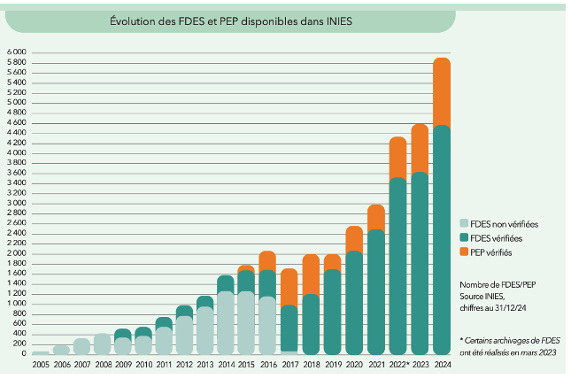
In terms of data volume, a strong increase has been observed in recent years for both FDES and PEP. Indeed, between 2022 and 2025, more than 1600 new environmental data entries (approximately 1000 FDES and 600 PEP) have been made available in the INIES database, representing an increase of about 36%.
Focus on Selected Products
We conducted a comparative analysis on different types of products to evaluate how environmental data has evolved both in terms of product quantity and impact between 2022 and 2025. The impact comparison was done statically, meaning by normalizing the total impact of products over the same lifespan.
Concrete Slabs
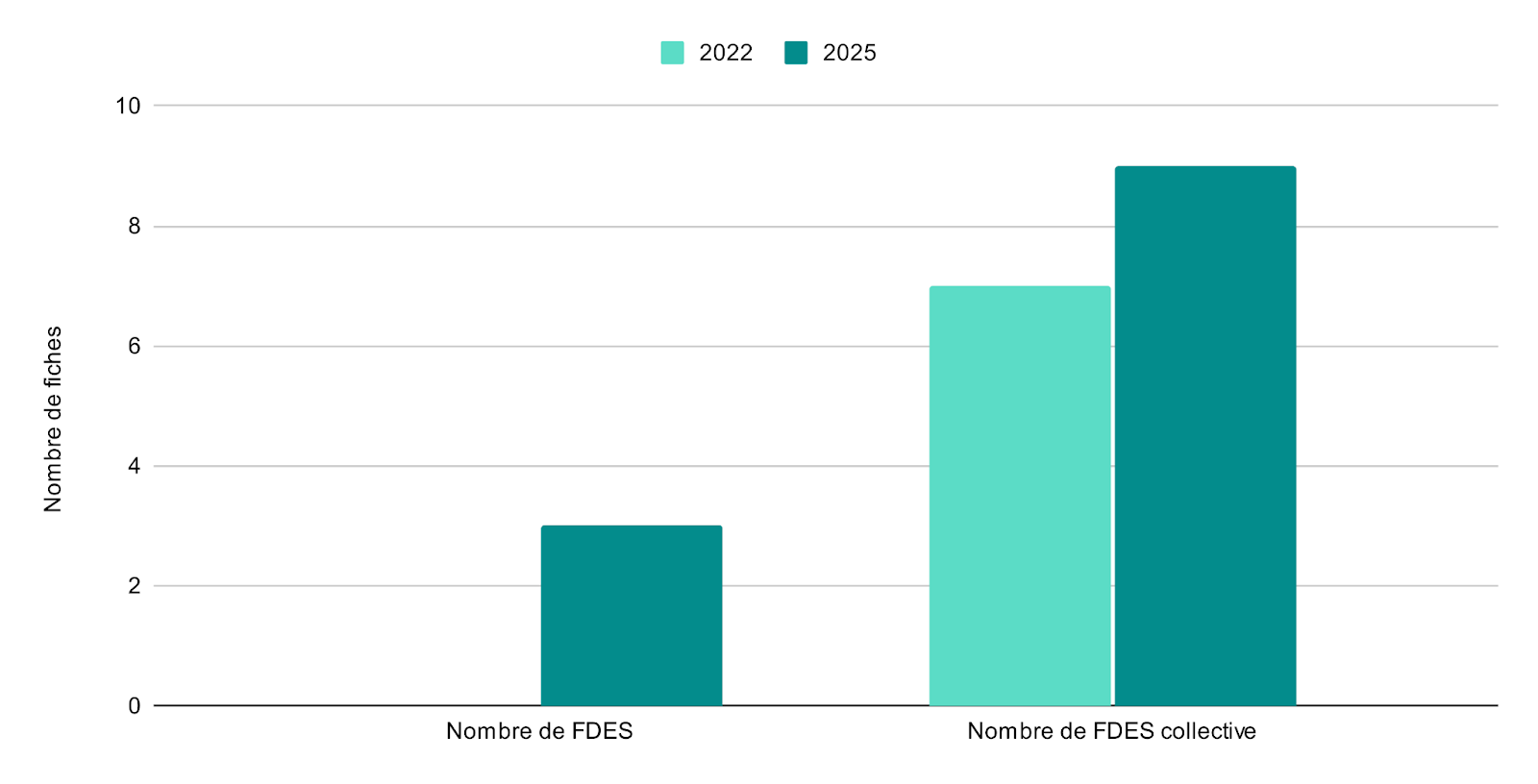
The first analysis focused on concrete slabs, a common element in many projects. The comparison shows that in terms of available data, the number has nearly tripled over three years, notably due to concrete suppliers creating new FDES, as well as the SNBPE (National Ready-Mix Concrete Union) continuing to publish collective FDES.
Furthermore, we also observe that with the addition of these new declaration sheets, coupled with a change in the standard for calculating greenhouse gas emissions from materials (from standard NF EN 15804 A1 to NF EN 15804 A2), the carbon impact has significantly evolved.
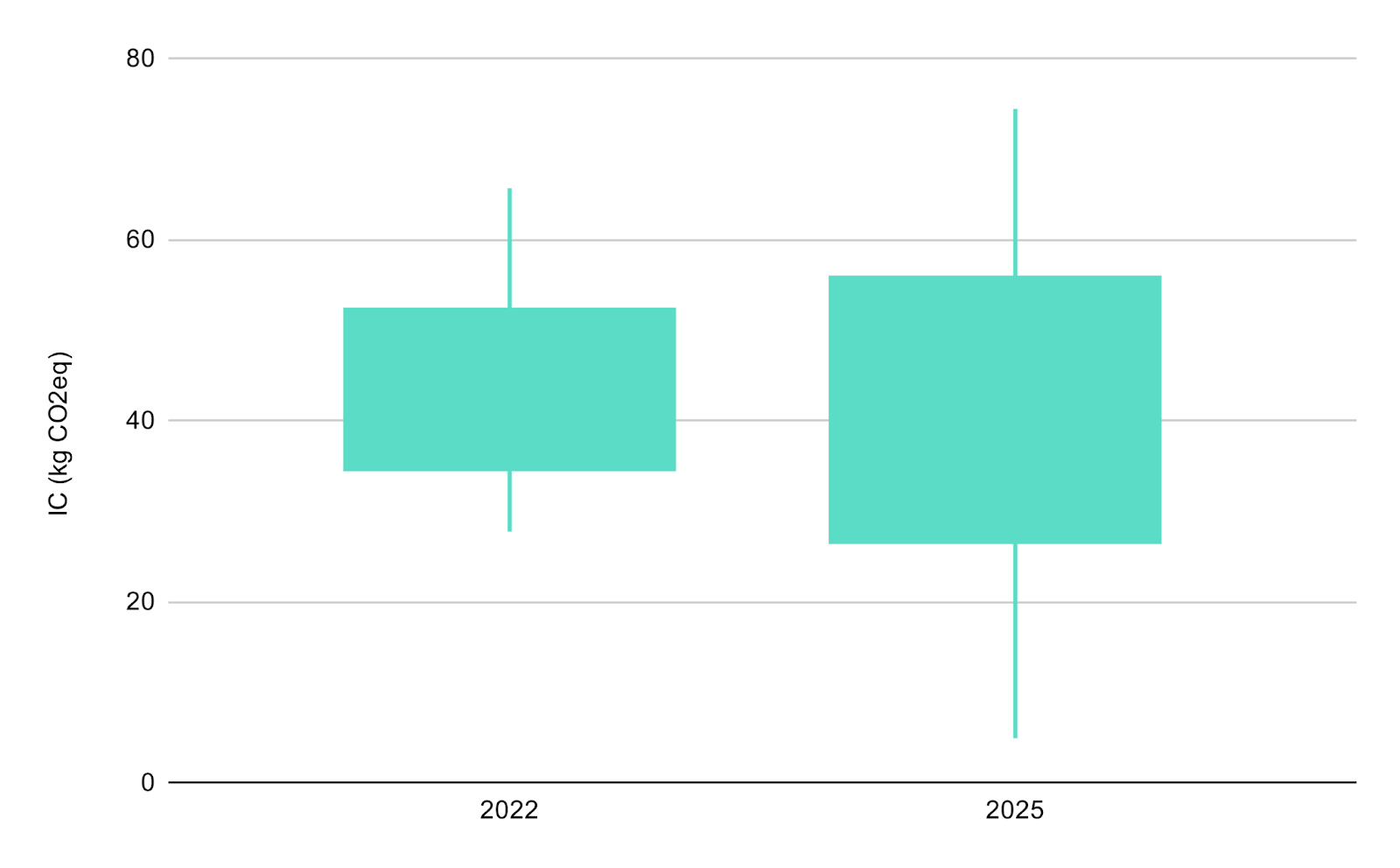
Secondly, we examined solid reinforced concrete slabs.
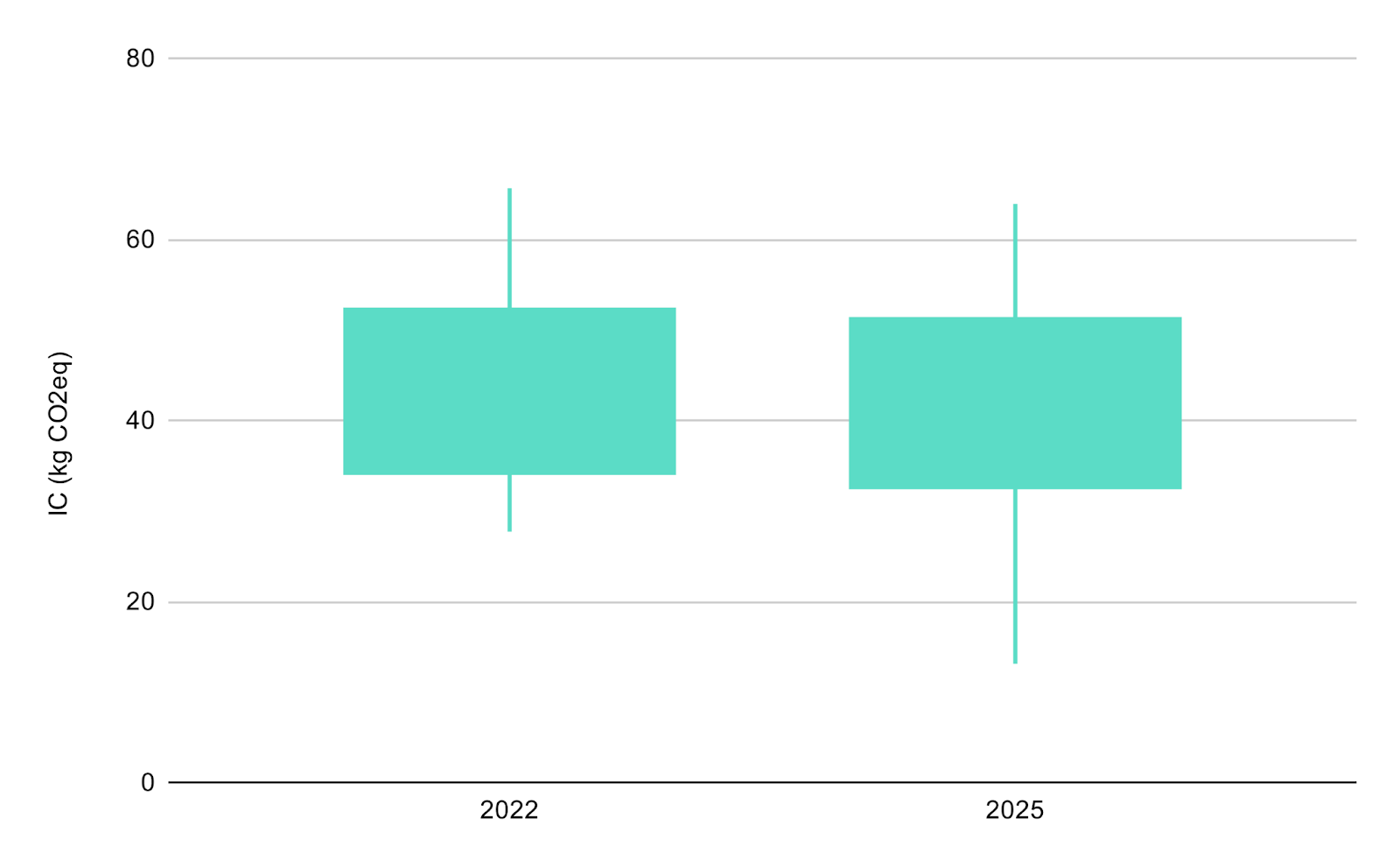
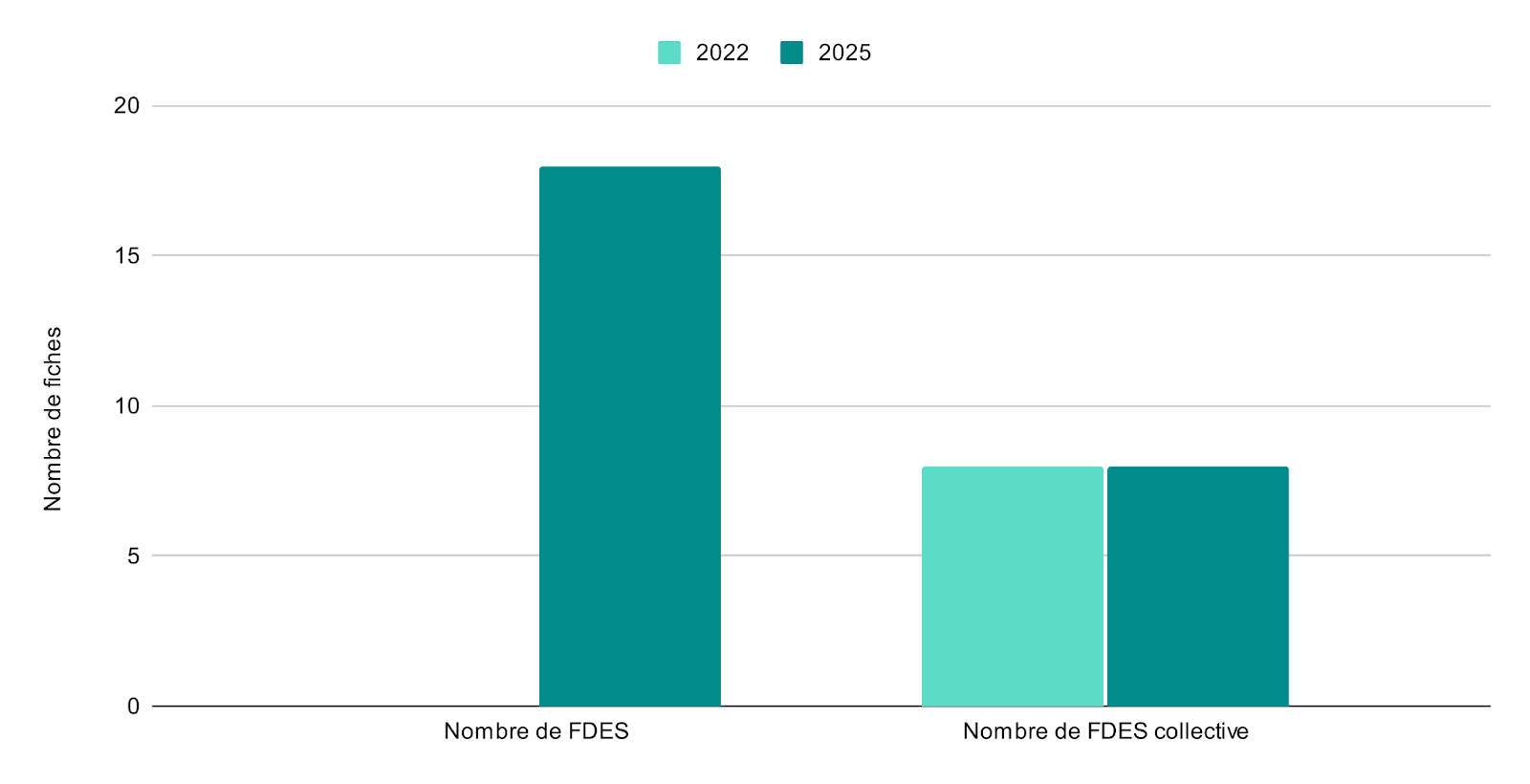
Today, the input of concrete elements in projects increasingly involves environmental data configurators, which allow specifying precise concrete formulations as well as the quantity of reinforcing steel used.
Carpets
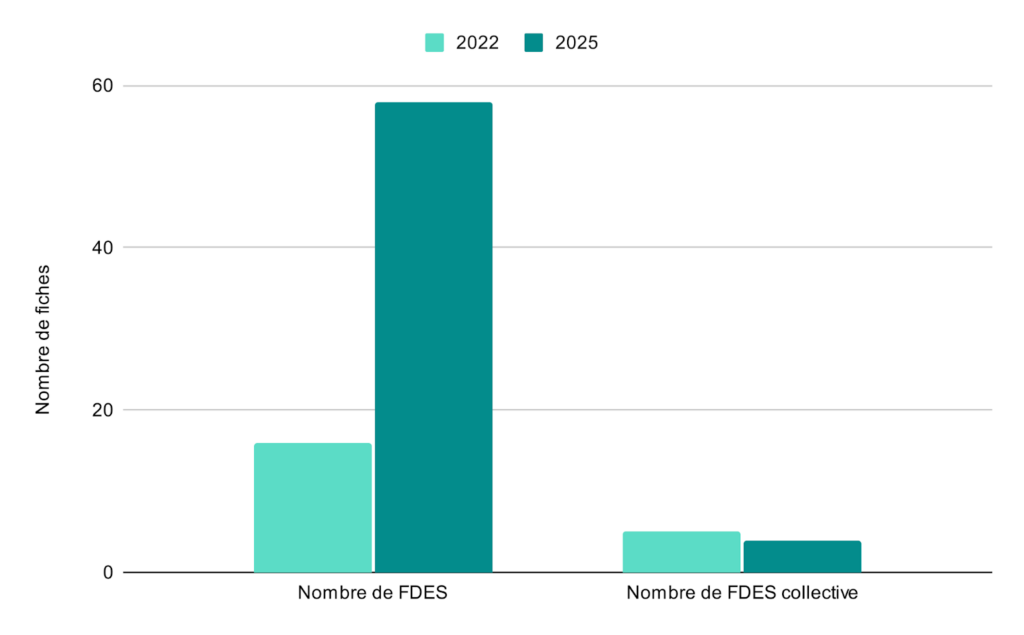
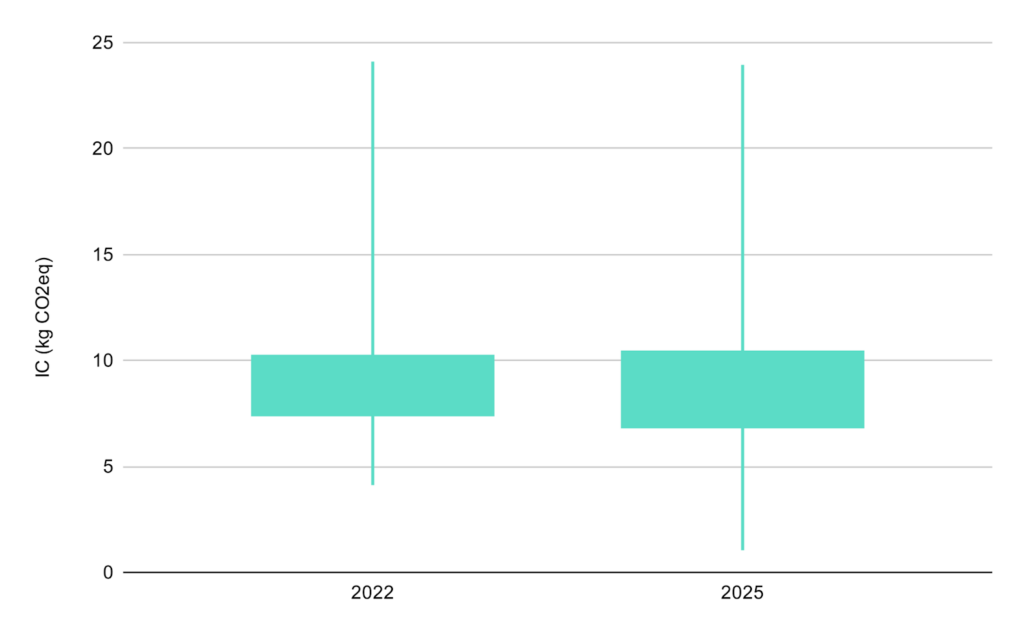
Next, the analysis focused on flexible floor coverings, specifically carpets. Many manufacturers have created environmental data covering multiple product ranges (approximately 300 carpets included), resulting in a significantly larger amount of environmental data with a lower overall impact than before.
Interior Lighting
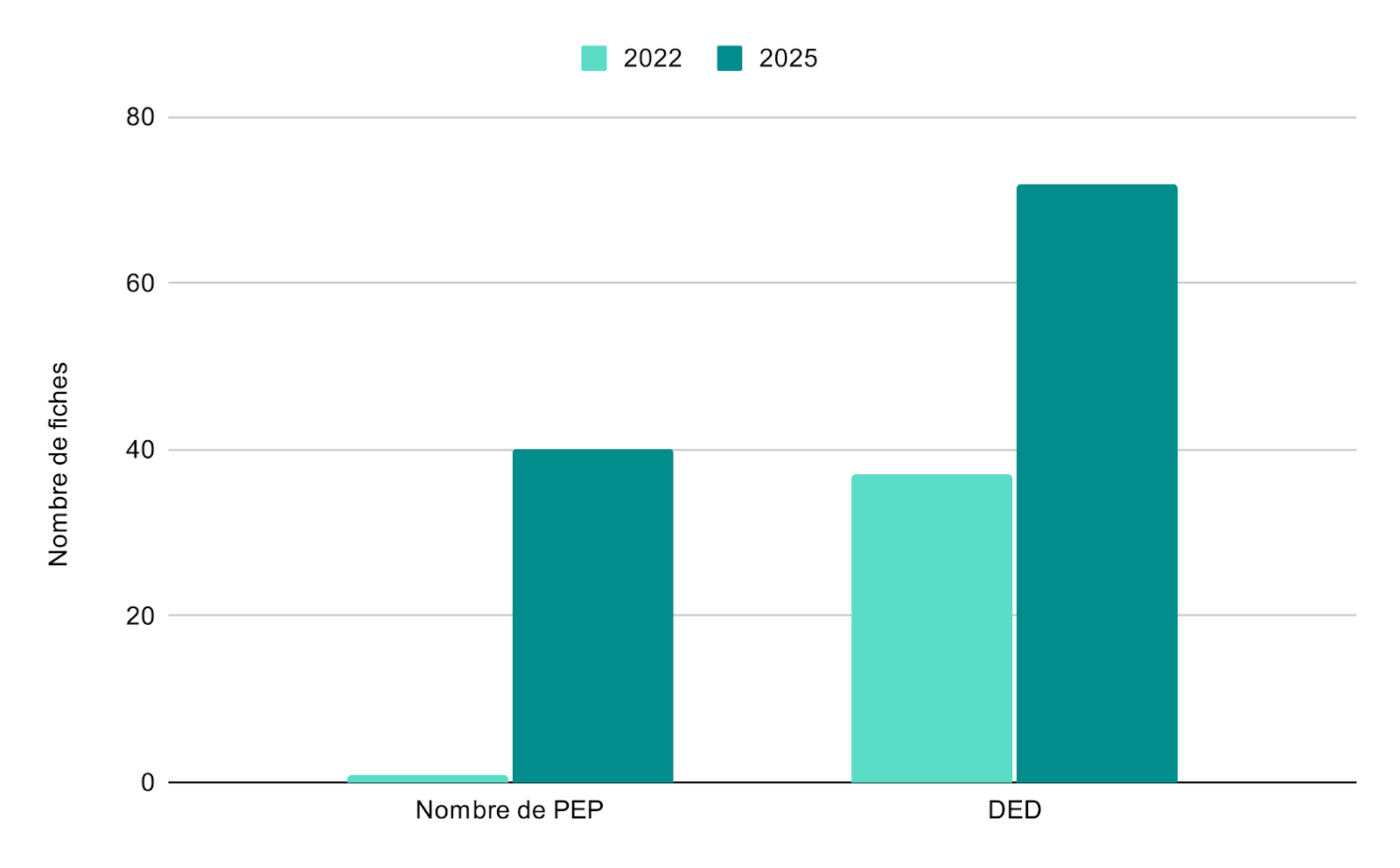
The focus then shifted to interior lighting. Indeed, for RE2020 projects, the CFO (Low Voltage Electrical Equipment) and CFA (Auxiliary Electrical Equipment) components are still often entered as lump sums (a fixed value encompassing all components) because there is still a lack of environmental data to fully specify these technical lots. However, it is becoming increasingly clear that more and more products have environmental data available, which suggests that detailed and complete data entry for these lots could be possible in the future. This would eliminate the need for lump sums and potentially enable optimization of the environmental impact of projects.
Comparison of default values for technical lots across projects
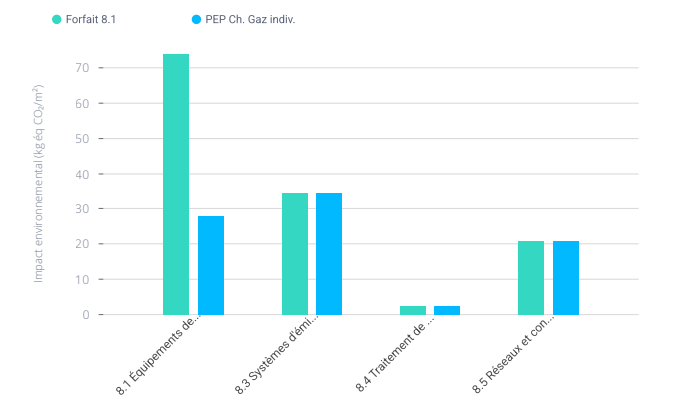
Previously, we discussed lump sum values used in RE2020 projects, mainly due to the lack of available data to enable complete data entry. One of the areas most affected by these lump sums is HVAC, particularly the heat production system, domestic hot water, or cooling (sub-lot 8.1 in a building Life Cycle Assessment – LCA).
Here too, many manufacturers have made environmental data available covering a wider range of their systems.
We therefore wanted to assess to what extent, by avoiding these lump sum values, the carbon impact at the project level could be improved. The comparison between the lump sum value of sub-lot 8.1 and the entry of this lot with Environmental Product Declarations (EPDs) for individual gas condensing boilers was made on a collective housing building.
Switching from lump sum values to EPD-based entries significantly reduces the impact of sub-lot 8.1 and offers real optimization for the project.
Over the past three years, the publication of numerous environmental data has revealed that an increasing number of manufacturers and industrial players are now communicating about the carbon footprint of their products, which are also becoming increasingly decarbonized. This development opens up new opportunities for carbon optimization and clearly illustrates that the market is progressively aligning with the requirements of current regulations regarding decarbonization.